digivice Inc.



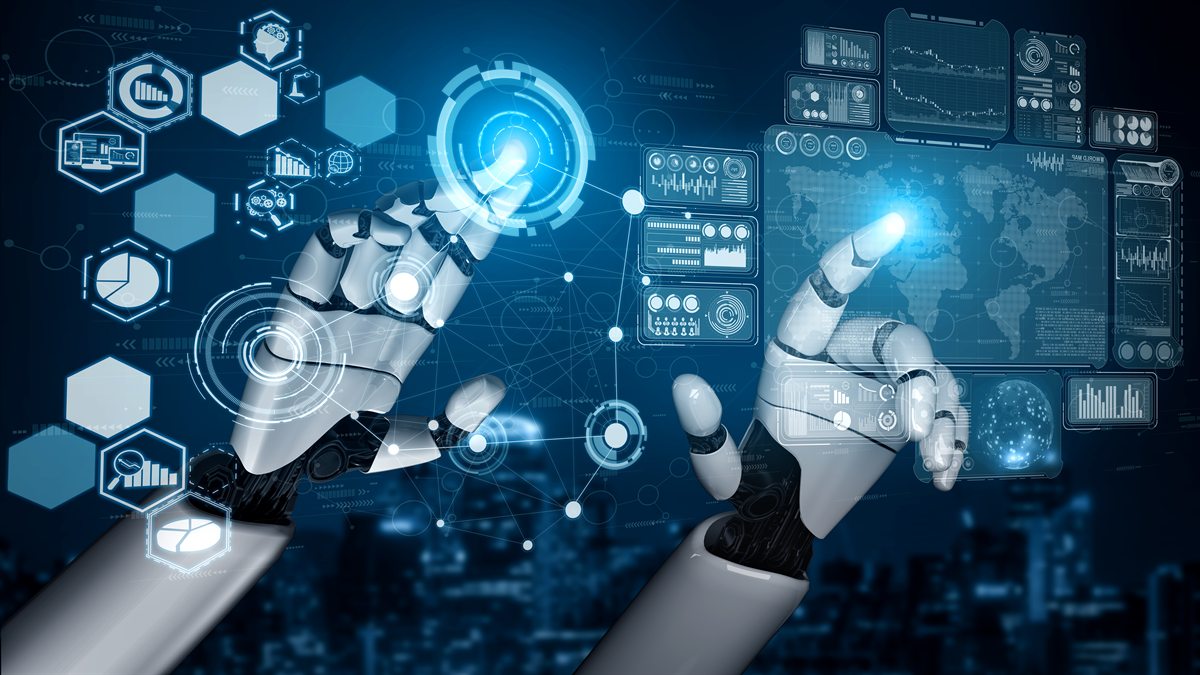
AI Native AX Consulting
Simply ``introducing AI'' will not change management in the slightest. With AI driving decisions, our cost structure will become overwhelmingly superior and we will be able to set ourselves apart from our competitors.
Decision-making has stopped at a quarterly cycle, ICT costs have ballooned, and competitors are starting to move based on AI.Management issues cannot be solved by "introducing" AI. The numbers will only change if management decisions, operations, data, systems, and organizational capabilities are rearranged based on AI. We use KPIs to prove that the CEO can "Scale, Stop, Shift" on a two-week basis.
Recent Cases / 2026
Three management issues and results changed by the AI agent team.
Towards a learning model that can reproduce experiential enthusiasm. Turn global market data into instant investment decisions. Breakthrough Legacy, which was defeated after 100 people x 4 years, with 1 person + 36 AI. These are all examples of how AI transformed management decisions that had been stopped at "meetings and documents" into evidence and execution units.
In the accelerated evolution described below, the speed of evolution of LLMs such as GPT/Claude has changed the premises of management decisions.
The inference model has entered the stage of breaking down complex issues and making decisions while rereading the evidence along the way. Updating the inference model is a stage where business assumptions are rewritten every few weeks or months. Rather than having to wait for the next model release, we need a management OS that can absorb the update speed itself. Rather than viewing the Singularity as a prophecy, we need to see it as a reality in which AI's ability to support decisions will grow faster than human boardrooms, and CEOs need to move their organizations to AI Native while retaining control over ethics, responsibility, and investment decisions.
The beginning of the LLM era
We have begun our journey from technology that handles language statistically to a platform that handles knowledge, context, and reasoning.
Change to conversation with AI
The first year that AI began to enter the knowledge work of general users. We have changed from light work replacements such as searching, summarizing, writing, and research to having conversations with AI.
To the stage where it is used as a decision aid
As LLMs assist human experts in professional exams, complex reasoning, coding, and academic areas. In terms of management, we have moved from "asking AI" to "using AI to support decisions."
read, see, listen, think
With GPT-4o, Claude 3.5, and o1, LLM has evolved into a read-watch-listen-write-code-think model. Evolution from instant response AI to AI that uses inference time.
One person utilizes many AIs
With o3/o4-mini, Claude 4, ChatGPT Agent, and Codex/Claude Code, LLM has created an agent type that continuously executes research, design, implementation, and verification, and we are entering an era where one person can utilize multiple AIs.
Exceeding human speed for domain specialization
Anthropic's Claude Mythos Preview/Project Glasswing shows that AI is beginning to surpass humans' discovery and verification speeds, at least in the cybersecurity field. This is not the arrival of AGI, but the beginning of surpassing the speed of humans in domain specialization.
begins to permanently exceed human tissue
LLMs and AI agents will begin to consistently exceed human organizations in meeting, researching, designing, implementing, verifying, and updating their decisions. This singularity is called singularity. 2026 is a harbinger of that, with Mythos proving that "the limits of human speed have already been broken in some areas."
It's no longer a wait-and-see situation. If we do not stop at preparations and start arming our management with AI, we are at the final stage where it may be too late.
First, check out the three examples below to see what AI Native will cause or change.
Since ancient times,Gods of Yaoyorozunurtured people's lives and culture. AI agent teams are a modern evolution and creation of that.
In ancient Japanese thought, gods resided in all kinds of mountains, rivers, plants, and trees, supporting people's activities and continuing to nurture their lives and culture. Each god has a role, interlocks with each other, and has moved the world.
What we aim for in the era of AI Native is the modern creation of that idea. Hundreds to thousands of AI agents reside in various areas of management and continue to support decisions, implementation, and improvements. People will lead AI teams with a higher sense of ethics and imagination, and create a world where results continue to flow.
AI dwells in management
Just as gods once inhabited every corner of nature and daily life, AI agents will dwell in every corner of management decisions, operations, data, and implementation, filling gaps that humans do not notice, and continuing to prepare materials for future decisions.
Develop organizational capabilities
Just as the gods nurtured people's lives and culture, the AI agent team will cultivate management, field, and ICT capabilities from within rather than replacing them from the outside, transforming the organization itself into an AI native.
Creating the next generation management OS
Just as the gods of Yaoyorozu created and nurtured this world, the AI agent team will create a new management OS. A small number of elite people will lead hundreds of AIs, and the very system that will continue to produce results will be ingrained within the company.
CEO's 6 Challenges
6 management issues faced by CEOs and solutions/KPI targets using AI Native.
AI Native does not mean handing out AI as a simple tool. It involves incorporating AI agents into management decisions, operations, data, systems, and organizational capabilities, and transitioning to a company OS that can quickly respond to changes. It far exceeds the average KPI value improved by top firms, and the equivalent transformation cost is less than 1/10th.

ICT costs are rising—resources aren't reaching the places they should be invested in
Meetings, documents, waiting for approval, and personal coordination continue to quietly consume cost and time. Without information about which costs to stop and where to reinvest, management will not be able to move forward.
Low business responsiveness—takes quarters from decision to implementation
Requirement definition, approval, development, and release are slow. Quarterly approval cycles can't keep up with AI-native competitors.
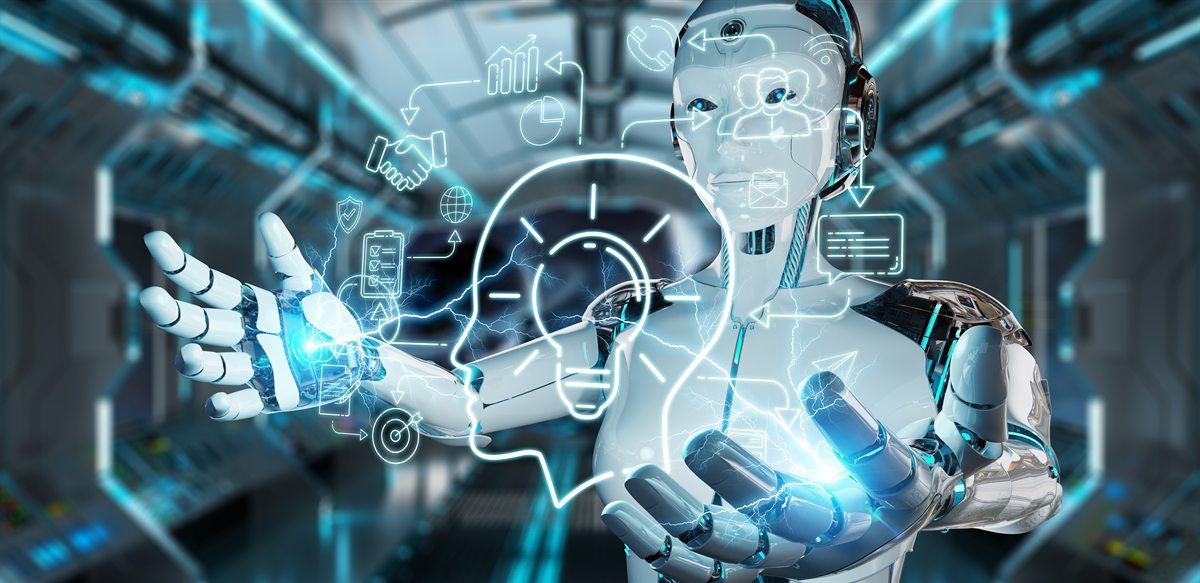
Data does not become a business asset—you can differentiate yourself from the competition while it is dormant
Customers, products, sites, contracts, and knowledge are closed to departments. The value of proprietary data is languishing, and the cost of holding on to unusable assets has become ``cost.''

Missing profit opportunities: Engaging in price competition at touchpoints where AI cannot be used
Without being able to incorporate AI into customer contact points, sales, and product development, the gap with AI-native competitors will widen at the business model level.

Human resources and organizational capabilities cannot keep up—dependence on outsourcing and individualization continue to persist
Even though the number of individuals who can use AI is increasing, there is a shortage of human resources who can connect everything from strategy to implementation to operation. If dependence on outsourcing and individualization remain, the speed of decision-making and implementation will not increase.
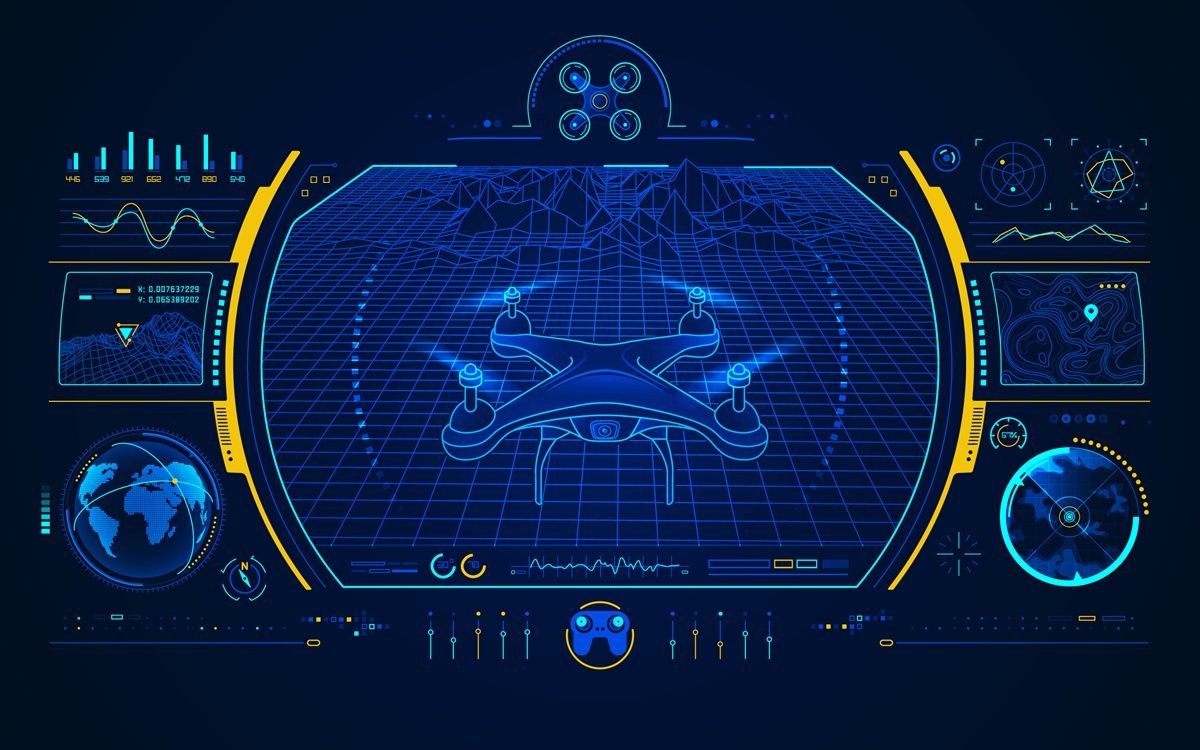
Control and responsibility are vague—if you stop too much, you will fall behind the competition
It cannot be rolled out company-wide if responsibilities for confidentiality, copyright, incorrect answers, and audits remain unclear. ``Waiting because there are risks'' is the biggest opportunity loss for CEOs.
Why AX Consulting
Reorganize the spending structure of the AI era to arm the CEO with AI.
We reallocate management resources and huge ICT operating costs that were wasted on meetings, materials, waiting for approval, and individual personnel coordination to strategy realization and highly responsive implementation capabilities.
AI agents parallelize inventory, impact surveys, approved materials, tests, and operational changes, leaving a trail. CEOs can use the same materials to decide which spending to stop, where to reinvest, and which themes to move on a two-week basis.
Our Approach
Break down business strategy into units of execution that can be used to make investment decisions.
There is a deep gap between executives, businesses, ICT sites, and vendors. AI stalls because the business case, business design, architecture, and demarcation of responsibilities are determined separately.
We make As-Is/To-Be, data infrastructure, cloud, legacy renewal, AI native infrastructure, execution control, and organizational capabilities into one execution plan, and specify who will make what decisions and when.
The AI agent team quickly digests the PoC, breaks it down into realization units, evaluates the quality of the results, and autonomously audits it. Meetings will no longer be a place for explanations, but will become a place to decide on Scale/Stop.
Services
Don't end with advice. Execute immediately. Collection begins immediately.
Rather than just handing out advice at a meeting, we immediately strategize management issues on the spot, and work as a team of AI agents to assemble decision-making materials, execution order, initial release scope, and verification cycle. By integrating strategy, operations, data, and systems into a single execution plan, we create a state where on-site implementation and continuous automation start moving from the moment the CEO decides on the next move.

Professional Profile
About US: digivice = CEO & Founder K.Takarabe / AX Architect
He is an AI-related specialist in all areas who is highly skilled as both a consultant and an enterprise architect, and is able to map the CEO's decisions to all layers of strategy, operations, data, systems, and AI agents, and ensure that they are established from on-site implementation to ongoing operation.
In addition to serving as a partner/managing director in the DX area at an independent consulting firm, he has also served as a technology advisor for a drone manufacturer at a major telecommunications group, a DX reform advisor at a major system integrator, a solution architect at IBM, and VPoE/CTO at a startup. We have moved difficult points between management and the field, such as returning a theme that had been stagnant for three months to execution in two-week units, significantly reducing impact investigation and inventory man-hours, legacy renewal, business consolidation, DX strategy, AI infrastructure, and Python/AI implementation.
Consultants tend to focus on strategy and consensus building, while architects tend to focus on structure and infrastructure design. A person with both of these skills at an expert level, who can also handle AI implementation and agent operation, is a rare combination of skills that you only come across once every 10 years. What AI architects need is not only model knowledge, but also absolute spatial awareness that can simultaneously see management issues, business flows, original data, APIs, authority, logs, demarcation of responsibilities, and operational changes.
It is not divided into only strategy, only design, and only implementation. Connect the CEO's points of discussion to operations, data, systems, and AI agents on the same map.
Rather than finding the optimal solution for each department, we design the structure and execution order of what needs to be changed throughout the company to keep the KPIs moving.
It doesn't end with issuing a policy. We take care of the infrastructure, API, permissions, logs, operational changes, and execution control, and bring it to a state where it can be used.
Not an advisor, not a designer. AX Orchestrator controls the AI agent team next to the CEO and shifts management to AI Native.
Even though AI investment is increasing around the world, there are still only a limited number of companies that have matured and are able to produce business results. What is needed is someone who can extend management decisions to the space of operations, data, applications, technology, and AI agents, and who can discern which layers need to be moved to change KPIs.
We organize multiple CLI Codex from the Codex Project like a team and run them in parallel with overwhelming productivity. All three cases were quickly built by the CEO himself in one to three weeks, and one of them was made into a main product by a major system integrator and has progressed to the stage where it is being rolled out across all projects within the company.
This is the stage where AI is integrated into workflows and delivers business results.
Employers see skills gap as a key barrier.
It is predicted that by 2030, IT work will be predicated on AI.
A group of companies that implement continuous company-wide transformation as a strategy.
Don't wait quarterly to decide whether to continue investing, withdrawing, or prioritizing. We are now in a situation where the CEO can be decided on a two-week basis.
Secure room to reinvest the reduced operating costs into AI infrastructure, customer contact points, and profit improvement.
Speed up the initial response to change requests and reform decisions, and return management resources to their original investment destinations.
Increase the number of change themes that CEOs can handle simultaneously and the frequency with which they update decisions.
Private AI Execution Environment
With an upfront investment of approximately 15 million yen, we are building a platform to run AI Native implementation locally.
We have already built the environment shown below as a Local AI Factory for controlling Yaoyorozu's AI agent, which allows efficient Try&Error of Codex, CLI Codex, RAG, and Private LLM.
96C / 192T、128 PCIe 5.0 lanes
7 PCIe 5.0 x16、4 M.2、SlimSAS、dual 10Gb
Private LLM / RAG Evaluation / Rebuttal Evaluation
Large capacity RAG/DB Cache/Agent simultaneous execution
Theoretical maximum: Read 18.5M IOPS / Write 26.0M IOPS
Separate OS, DB-WAL, Vector Index, and Scratch
Contact
Decide where to start from the first conversation.
ICT cost reduction, decision-making speed, AI Native transition, legacy renewal—we will determine which management issues to start with to get the KPIs moving in the shortest time, and we will clarify the priorities and execution units during the first dialogue. Rather than a written proposal, we start with a situation where the CEO can decide what to stop, where to reinvest, and when KPIs will change.
We will convert a wide range of business demands and issues into optimal gears (architectures) that can be directly implemented, and build a system that combines AI and optimal architecture to drive self-propelled improvements in the future.
This requires the ability to combine deep experience as a consultant, wide knowledge as an architect, and Silicon Valley-class cloud knowledge in advanced areas, as well as the knowledge to fully utilize the current highest level of AI and an environment that can make this possible.
Personally, I have rarely met people in Japan who possess these skills, whether at a firm or a major integrator. We don't meet each other in Japan, and even overseas we rarely meet. In the first conversation, I would like to talk about the overwhelming support power that can help you organize 5,000 man-months in a few months.
Please feel free to contact us.
- digivice Inc.
AX Consulting / Digital Architecture / AI-Native Execution - CEO & Founder / Kazutaka Takarabe, AX Architect
- linkedin.com/in/kazutaka-takarabe-a4815634
- © digivice Inc. All rights reserved.